

Read this if you…
- Like a guy worried about what city life/industrialization does to culture
- Like the theme of art and feeling pitted against business and property
- Like the theme of class
Skip this if you…
- don't like an intrusive narrator
The  Take
Take
Quick read, reasonably fast plot, lots of nice asides about industrialization/business vs poetry/nature/feeling.
The lineage through Howards End
- Middlemarch by George Eliot. Howards End built on it. - _Howards End_ is the early-twentieth-century heir to Eliot's _Middlemarch_. Critics reach for the comparison first: the same authoritative narrator persuading you about how people work, the same panoramic ambition to take the measure of England. - The novel's central crux — who rightfully inherits the house — runs on a suppressed deathbed bequest, the will-and-inheritance plot Eliot perfected; Forster makes the destroyed scrap of paper the moral hinge of the whole book. - Where Eliot anatomized provincial life, Forster anatomizes the Edwardian classes; the country-house tradition the title invokes runs straight back through Eliot.
- Tess of the D’Urbervilles by Thomas Hardy. Howards End built on it. - _Howards End_ owes its pastoral conscience to Hardy. Forster followed Hardy in trying to bring 'the poetic possibilities of the country into the novel'; the house and its land carry the same elegiac sense of a vanishing rural England that Hardy gave Wessex. - Forster's own criticism shows the debt: in _Aspects of the Novel_ he faulted Hardy for ordering characters 'to acquiesce' to plot but made Tess the exception, 'greater than destiny' — proof Hardy's tragedy was live for him.
- Pride and Prejudice by Jane Austen. Howards End built on it. - _Howards End_ descends from Austen's novel of manners — the genre Forster updates here. He used the free indirect discourse and the ironic, norm-setting narrator he openly admired in Austen to expose the gap between his characters' self-image and their conduct. - Critics call Forster the truest claimant to be Austen's spiritual heir; the contrasted-sisters pairing at the novel's moral center belongs to the Austen tradition this book carries forward.
Depicted in Art
A broad Hertfordshire chalk-down landscape near Letchworth — the ancient track rolling between hedgerows and fields under a bright sky.
Spencer Gore, 1912
The red-brick, tile-roofed Hertfordshire farmhouse — Forster's childhood home and the direct model for the house Howards End in the novel.
Edwardian Hertfordshire farmland and new garden-city housing meeting at the edge of open country, fields giving way to building.
Spencer Gore, 1912
Recommended Editions

Penguin Classics
2000
The one to start with. David Lodge's introduction and notes orient you without spoiling, and Penguin's clean text and apparatus make it the most readable in-print edition.
Please support us by purchasing through these links, at no extra cost to you!
Notable Quotes
Only connect!
Screen & Stage
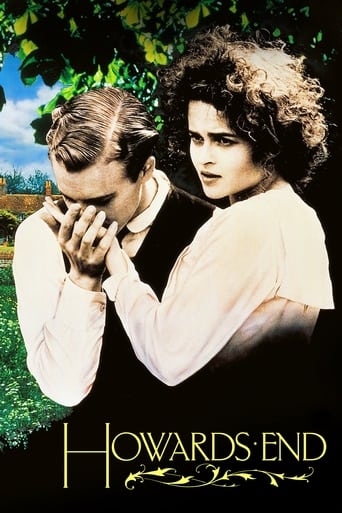
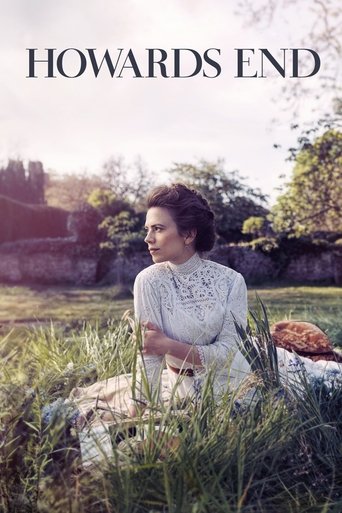
Also adapted: The Inheritance (2018, stage)
Posters via The Movie Database (TMDB)
In her Tony acceptance speech for The Inheritance, she called Howards End her 'favorite novel for as long as I can remember.'