

Read this if you…
- LIke a book about nostalgia/ missed chances
- Love romanticization of rural life/ nature
Skip this if you…
- don't like a disjointed/ episodic plot
- want a classic love story
The  Take
Take
A very sweet, image laden story around a bunch of out towners moving to rural America and making it work, finding beauty despite the hardship. Both romanticizes and criticizes the rural life, but finds an enduring spirit there. Burdens attraction vibrancy of Antonia is the spirit of the whole book, and it’s all framed by his love/nature nostalgia in an almost wordsworthian way
The lineage through My Ántonia
- The Georgics by Virgil. My Ántonia built on it. - The book wears its model openly. Its epigraph is Virgil's _Optima dies... prima fugit_ from the _Georgics_, and that line surfaces again inside the story when Jim, a Latin student, sits with the text and feels his own lost youth float up off the page. - Jim's revelation over Virgil's _deducam Musas_ — the poet's vow to bring poetry home to his small rural _patria_ — is Cather's mission statement: to consecrate the immigrant prairie as worthy ground for serious literature. - Cather builds her American pastoral on the _Georgics_' faith that the land and the people who work it are the proper matter of poetry.
- The Aeneid by Virgil. My Ántonia built on it. - Jim's classical education runs on Virgil — he reads the _Aeneid_ by name, memorizing long stretches of it — and Cather uses the epic of exile and resettlement as the mythic frame for a Nebraska of uprooted Bohemians, Norwegians, and Russians making a new home. - The novel's elegiac sense of a heroic founding age now vanished is the _Aeneid_'s pietas and loss transposed to the Divide, an American myth told in a Virgilian key.
Depicted in Art
Lena Lingard, the soft, ambitious hired girl from the Norwegian settlement, shown in portrait.
Władysław T. Benda, 1918
Figures hauling home a small Christmas tree across the snow-covered Nebraska divide.
Władysław T. Benda, 1918
Ántonia in silhouette behind a plough, working the open field like one of the hired men.
Władysław T. Benda, 1918
The older Ántonia, weathered and surrounded by her large farm family, in the closing book of the novel.
Władysław T. Benda, 1918
A peasant woman bent over the prairie grass, gathering the dried mushrooms the Shimerdas brought from the old country.
Władysław T. Benda, 1918
The Shimerda immigrant family stands huddled on a windswept Nebraska train platform, newly arrived from Bohemia.
Władysław T. Benda, 1918
Mr. Shimerda, Ántonia's gentle, homesick father, shown in pen-and-ink portrait.
Władysław T. Benda, 1918
Recommended Editions

Penguin Classics
1994
The one to start with. John J. Murphy's introduction and notes set up the prairie immigrant world without spoiling it, and this is the rare in-print edition that restores W. T. Benda's original 1918 line drawings, which Cather considered part of the book.
Please support us by purchasing through these links, at no extra cost to you!
Notable Quotes
Whatever we had missed, we possessed together the precious, the incommunicable past.
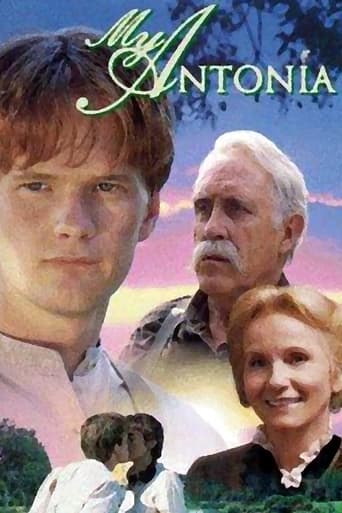
Featured My Ántonia on her reading list, calling it 'beautifully written' and saying it 'makes one dream.'