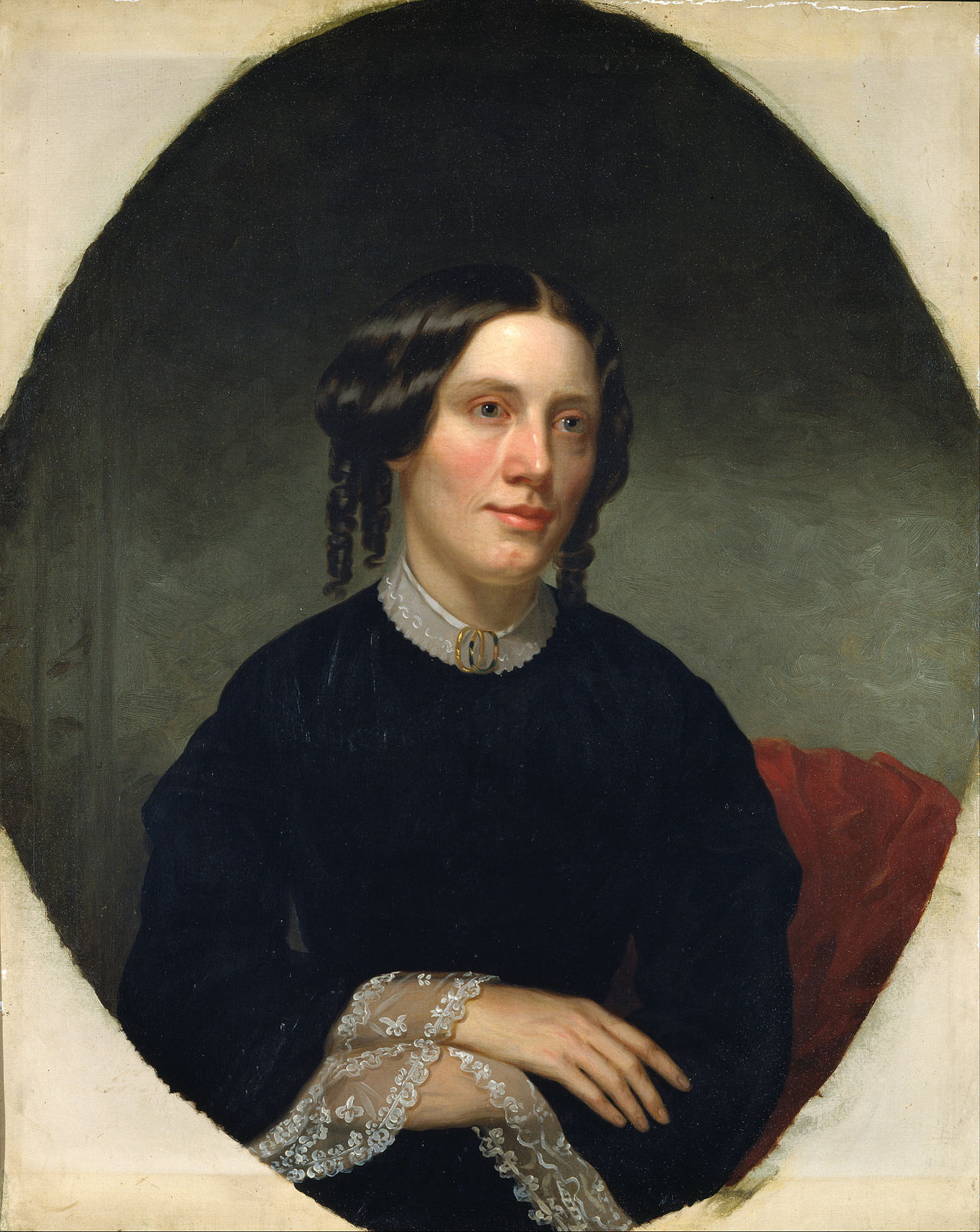
Harriet Beecher Stowe
1811–1896 · USA
“So this is the little woman who wrote the book that started this great war.”
Peak-work percentile in the canon.
The lineage through Harriet Beecher Stowe
Drew From(2)
who shaped Harriet Beecher Stowe
via The Gospels
- Tom's only book is the one standing behind this one — he reads nothing but the New Testament, and lives by it
- Stowe built her whole moral case on Gospel doctrine: Christian love as the answer to slavery, Tom as a deliberate Christ-figure
- Knowing these chapters first lets you see exactly which scenes Stowe is quoting and which sufferings she's mapping onto her hero
- Stowe quotes Bunyan directly and built Tom's story on his blueprint — a pilgrim's progress through bondage toward salvation
- The Pilgrim's Progress supplied the allegorical machinery: a journey of the soul through tribulation, characters named for what they are
- Read Bunyan first and you'll see Stowe's abolitionist novel for the Calvinist pilgrimage it is underneath
Inspired(1)
who Harriet Beecher Stowe shaped
via The Jungle
- The book that invented the American protest novel — and handed Upton Sinclair his blueprint half a century later
- Sinclair set out to write "the Uncle Tom's Cabin of the labor movement," trading Stowe's plantations for Chicago's slaughterhouses
- Jack London christened The Jungle "the Uncle Tom's Cabin of wage slavery" — the lineage was acknowledged at birth
Portraits
Early Boston daguerreotype (Met Museum) taken around the time of Uncle Tom's Cabin — the sharpest contemporary likeness of Stowe in her late 30s.
Southworth & Hawes, 1850
The signature painted portrait (National Portrait Gallery, NPG.68.1), commissioned in 1853 for an Uncle Tom's Cabin stage production — the museum oil everyone reprints.
Alanson Fisher, 1853
Famous Quotes
“No! no! no! my soul an't yours, Mas'r! You haven't bought it,—ye can't buy it! It's been bought and paid for, by one that is able to keep it;—no matter, no matter, you can't harm me!”
“Ye poor miserable critter! there ain't no more ye can do! I forgive ye, with all my soul!”
“I'd rather be sent to the bottom of the Mississippi than be sold from my wife and children.”
“We don't own your laws; we don't own your country; we stand here as free, under God's sky, as you are; and, by the great God that made us, we'll fight for our liberty till we die.”
About Harriet Beecher Stowe
American abolitionist and author whose 1852 novel Uncle Tom's Cabin became one of the most influential books in American history, energizing the anti-slavery cause and provoking outrage in the South. Lincoln reportedly greeted her with the words 'so this is the little woman who wrote the book that started this great war.' Stowe wrote more than thirty books across genres but never escaped the shadow of her famous novel.