

Read this if you…
- love the movie Apocalypse Now (it's incredible)
- want one of the shortest classic books
- are into stories about what happens when civilization's guardrails come off
Skip this if you…
- won't be patient with difficult prose. some of the hardest prose I've read
- find outdated views of "uncivilized" people offputting
The  Take
Take
The slow brooding descent into darkness is just fantastic. Loved the idea of the genius who is absolutely magnetic going deep into the darkness and find nothing but horror at the end. Was a little difficult to understand at some points.The overarching colonial “meaning” to me seems largely overstated. I don’t think Conrad meant it to be very pro or anti colonial/Africa etc, was just a vessel/symbolism for a sophisticated soul with bells and whistles being invaded when those bells and whistles are removed. None of the characters besides marlow and Kurtz even have names.
The lineage through Heart of Darkness
- The Divine Comedy by Dante Alighieri. Heart of Darkness built on it. - *Heart of Darkness* is a descent into Hell, and Conrad makes the model explicit - Marlow calls the grove of the dying "the gloomy circle of some Inferno" — Dante's vocabulary, summoned to name a horror modern prose couldn't hold on its own - Reading the *Comedy* first lets you hear what Conrad is leaning on: the structured journey downward, the encounters with souls, the living man passing through the dead
- The Aeneid by Virgil. Heart of Darkness built on it. - Marlow's journey to Kurtz is a katabasis — a descent to the underworld, modeled on *The Aeneid*'s Book VI - Read Virgil first and the architecture surfaces: the women guarding the threshold as the Sibyl, Kurtz as the oracle waited for in the dark, the ivory as the gate by which one exits the realm of the dead - Conrad gives the colonial river the weight of myth — the gunship's fire becomes "the thunderbolts of that pitiful Jupiter"
- The Good Soldier: A Tale of Passion by Ford Madox Ford. Heart of Darkness shaped it. - Conrad and Ford were literal collaborators (*The Inheritors*, 1901; *Romance*, 1903), working out their shared literary-impressionist method side by side from 1898 to 1909 - The unreliable narrator and time-shift Conrad perfects here — Marlow circling his own story, withholding and reordering — is the technique Ford carried straight into his own masterpiece - *Heart of Darkness* is where you watch that method being invented; *The Good Soldier* is where Ford pushes it to its breaking point
Depicted in Art
Cover of the issue of Blackwood's Magazine that began the three-part serial run of Heart of Darkness.
1899
The Belgian river steamer Roi des Belges underway on the Upper Congo, the boat Conrad commanded in 1890.
1889
King Leopold II of Belgium rendered as a giant serpent, coils wrapped around a Congolese rubber collector.
Edward Linley Sambourne, 1906
Studio portrait of Joseph Conrad, bearded, in three-quarter profile, taken five years after Heart of Darkness was published.
George Charles Beresford, 1904
Recommended Editions

Penguin Classics
2007
Owen Knowles's Penguin pairs the novella with Youth and The End of the Tether, so you see Conrad's Marlow trilogy together. Clean text, leaner intro, easiest to carry.
Please support us by purchasing through these links, at no extra cost to you!
Notable Quotes
The horror! The horror!
Screen & Stage
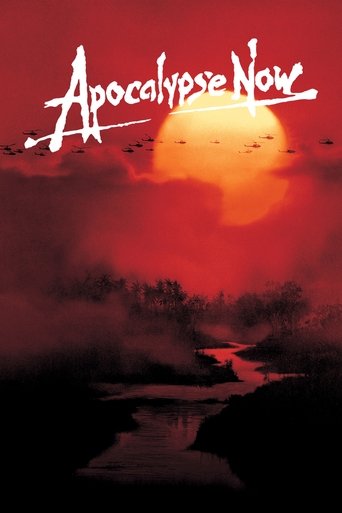
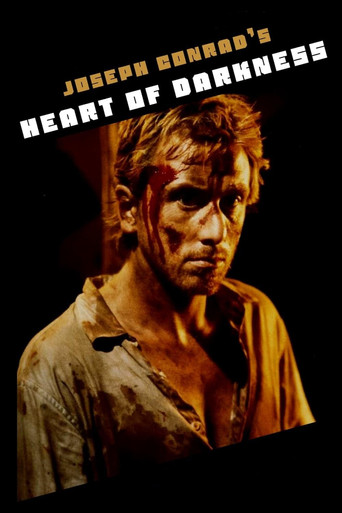
Posters via The Movie Database (TMDB)
- Bill Maher, comedian, host of Real Time with Bill Maher, 1956–: "My all-time favorite, even before Francis Ford Coppola turned it into Apocalypse Now. The ultimate topic, the ultimate metaphor."
- Orson Welles, American filmmaker & actor, 1915–1985: Welles called his unproduced 1939 adaptation "a kind of parable of fascism" and "terribly loyal to Conrad."
- Harold Bloom, Yale literary critic, author of "The Western Canon", 1930–2019: More analysed than any other work taught in universities — a tribute to Conrad's unique propensity for ambiguity.