
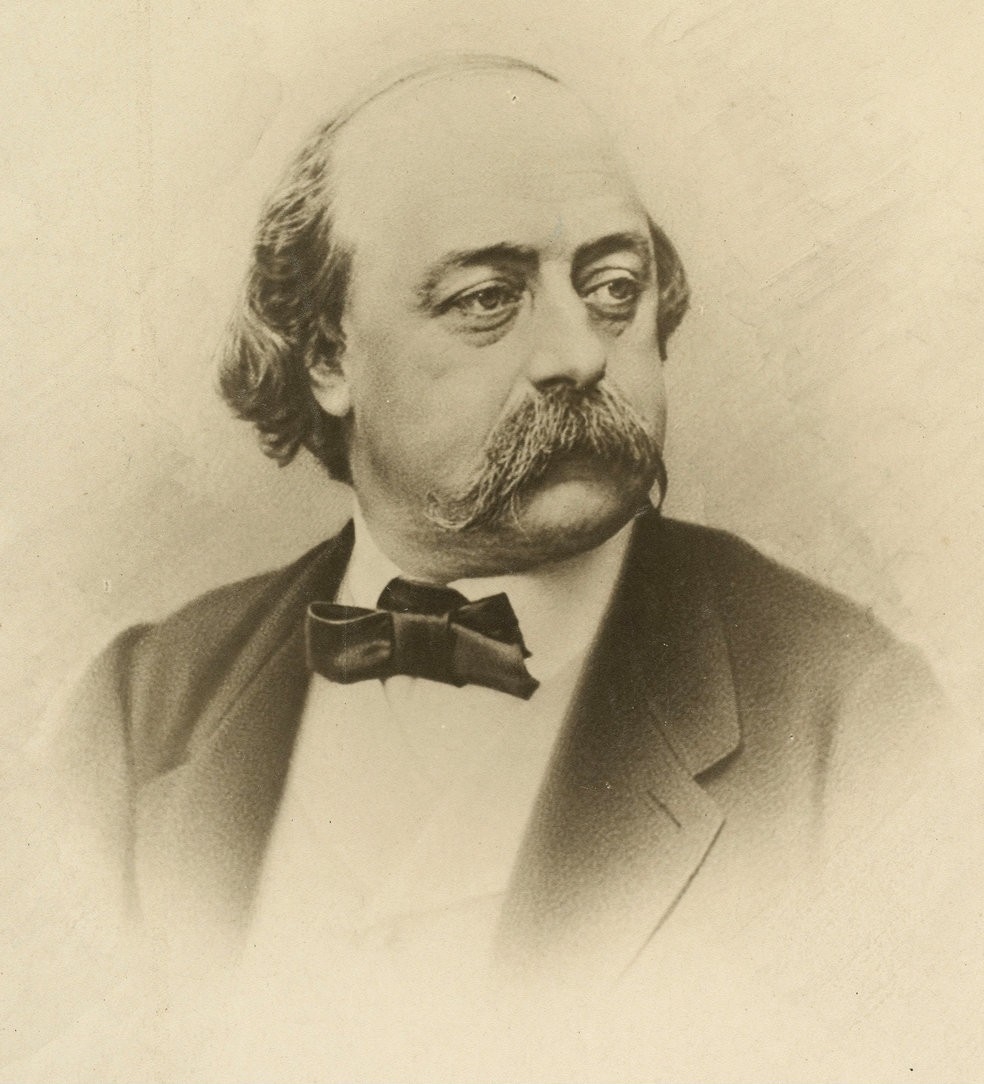
Read this if you…
- want to read a book that is insanely overrated just because academics love the idea of Flaubert
- want a forgettable protagonist
Skip this if you…
- are expecting this to be close to as good as madame bovary
- want a plot that's not terrible
The  Take
Take
I guess there’s some great descriptions and the realism is good, but it’s just too all over the place and nothing built to anything. The plot was so chaotic and so much overlay of French politics and stuff, it just seemed like a big scrambled mess. Preferred bovary, but still just don’t appreciate Flaubert like Hugo , Stendhal and dumas
The lineage through A Sentimental Education
- Don Quixote by Miguel de Cervantes Saavedra. A Sentimental Education built on it. - Frédéric Moreau is a 19th-century Quixote — a man undone by the romantic delusions he's read his way into - Flaubert grew up on *Don Quixote* read aloud and called Cervantes the origin of his imagination; the "quixotic" figure runs straight into this novel - Reading Cervantes first gives you the template Flaubert is darkening: the idealist whose convictions can't survive contact with the real world
- Candide by Voltaire. A Sentimental Education built on it. - *A Sentimental Education* applies Voltaire's anatomy of human stupidity within Flaubert's realist register — he read *Candide* roughly a hundred times and called it one of his "sacred books" - Voltaire's *bêtise*, sped through a picaresque, becomes Frédéric's slow drift through a real and disappointing world - Read *Candide* first and the ending lands harder: "cultivate your garden" is the bright original that Flaubert dims into resignation
- The Good Soldier: A Tale of Passion by Ford Madox Ford. A Sentimental Education shaped it. - Ford Madox Ford called this the supreme novel — he claimed you had to read *A Sentimental Education* fourteen times to grasp it, and he could recite whole sections from memory - He preferred Flaubert's frustrated, sidelong story of passion here to *Madame Bovary* — and built *The Good Soldier* in its image - Flaubert's oblique method, never stating the feeling head-on, became the blueprint for Ford's English impressionism a generation later
Depicted in Art
Title page of the Michel Lévy Frères first edition of L'Éducation sentimentale, Paris, 1869.
1869
Half-length portrait of Élisa Schlésinger as a young woman, the real-life model for Madame Arnoux.
Achille Devéria, 1840
Recommended Editions

Robert Baldick
Penguin Classics · 2004
Baldick's translation, touched up by Geoffrey Wall, holds Flaubert's deliberately flat surface better than the older versions. Wall's introduction is strong on why nothing dramatic is supposed to happen.
Please support us by purchasing through these links, at no extra cost to you!
Notable Quotes
Yes, perhaps. That was the best time we ever had.
Screen & Stage
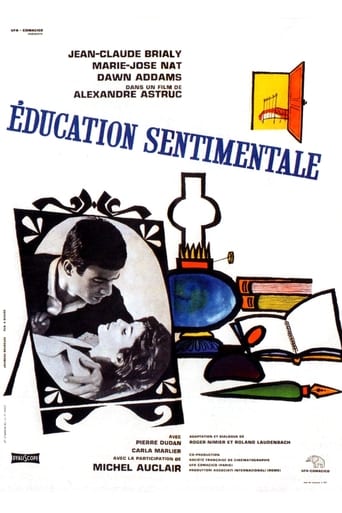 loose
looseSentimental Education
Film · 1962
Alexandre Astruc
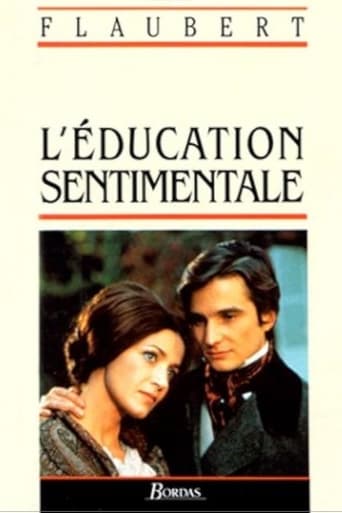
L'Éducation sentimentale
TV · 1973
Marcel Cravenne
Posters via The Movie Database (TMDB)
- Woody Allen, American filmmaker and actor, 1935-: In Manhattan, Allen's Isaac Davis lists Sentimental Education by Flaubert among the things that make life worth living.
- Marcel Proust, French novelist, 1871–1922: "In my opinion, the most beautiful thing in Sentimental Education is not a sentence, but a blank."
- George Sand, French novelist, 1804–1876: "A beautiful book, equal in strength to the best ones of Balzac and truer."
- Edmund Wilson, American literary critic, 1895–1972: "Flaubert, by a single phrase—a notation of some commonplace object—can convey all the poignance of human desire, the pathos of human defeat."
- Jim Jarmusch, American filmmaker, 1953-: "I like Flaubert's novels, especially Madame Bovary and A Sentimental Education."
- Pierre Bourdieu, sociologist & philosopher, 1930–2002: "That book on which a thousand commentaries have been written, but which has undoubtedly never been truly read."