
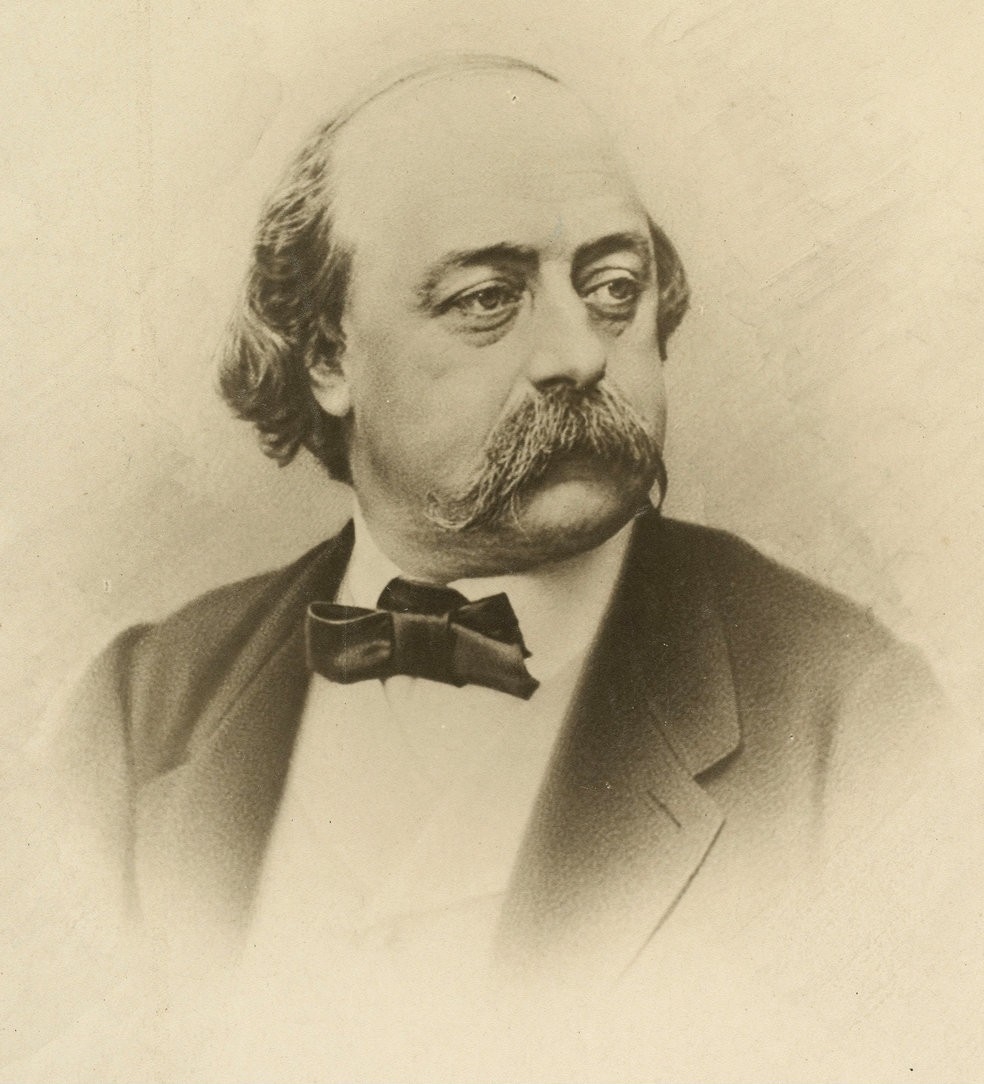
Read this if you…
- want the novel critics/academics credit with being a huge deal for realism
- like a protagonist you can sympathize with, but don't approve of
- want probably the shortest 19th century french classic
Skip this if you…
- need a perfectly good hero to root for
Why It Matters
Flaubert changed what novels could do with language. His near-obsessive hunt for "le mot juste," the exact right word, set a standard of prose every serious novelist since has had to reckon with. Emma Bovary destroying herself through romantic fantasy is also the first great portrait of how unrealistic expectations and consumer culture wreck real lives.
The  Take
Take
I thought the degeneration of Emma to be so well done, because the yearning for something more is relatable despite her horrible means. The men all seemed relatively realistic, bailing at the last minute , or in monsiers case, just not wanting to think too hard. I thought the imagery and setting of scenes was great. Wasn’t too long. It was great
The lineage through Madame Bovary
- Don Quixote by Miguel de Cervantes Saavedra. Madame Bovary built on it. - *Madame Bovary* descends straight from *Don Quixote* — Flaubert knew it by heart before he could read, and called it the book he found his origins in - Cervantes' great subject — a mind ruined by the wrong books — is Emma's whole tragedy, the romances of chivalry swapped for the romances of love - A full study (Soledad Fox Maura's *Flaubert and Don Quijote*) traces the direct shaping; reading the Don first reveals the bloodline behind Emma's delusion
- Anna Karenina by Leo Tolstoy. Madame Bovary shaped it. - The adultery novel Tolstoy answered back — he owned a copy bound together with *Othello*, the two filed under the same question - He wrote his wife in 1892 that *Madame Bovary* "has great merits and is, not without reason, famous" - Scholars read *Anna Karenina* as a deliberate polemic with Flaubert: the same fall, judged on entirely different terms
- The Good Soldier: A Tale of Passion by Ford Madox Ford. Madame Bovary shaped it. - Flaubert was one of Ford's literary gods, and *Madame Bovary* was the textbook he taught the novelist's craft from - Edward Ashburnham is an English Emma Bovary — a sentimentalist ruined by the romantic illusions his reading taught him - Both novels close the same way: an adulterous wife dead by her own poison
Depicted in Art
Emma lies dead in her bedroom at daybreak; Charles slumps at the bedside as a priest and the household keep vigil.
Albert Fourié, 1883
The country wedding of Charles and Emma — the long banquet at the Rouault farm that opens the novel's marriage plot.
Charles Léandre
Etched portrait study of the hapless husband Charles Bovary.
Edgar Chahine, 1935
Emma walking arm-in-arm with a male companion — the public face of her infidelity.
Alfred de Richemont, 1905
Emma in costume at a Parisian-style masked ball, the late episode in Rouen when she goes out cross-dressed.
Charles Léandre
Pastel portrait of a male figure — "An Acquaintance of Madame Bovary" — in Gulácsy's dreamlike fin-de-siècle style.
Lajos Gulácsy, 1910
Recommended Editions

Lydia Davis
Penguin Classics · 2010
Davis is one of the most exacting prose stylists alive in English, and Flaubert is the novelist who agonized over every comma. The result is the rare Bovary where the famous flat surface in French stays flat in English.


Please support us by purchasing through these links, at no extra cost to you!
Deep Dive
What It's About
This summary gives away plot details.
Notable Quotes
“Human speech is like a cracked kettle on which we tap crude rhythms for bears to dance to, while we long to make music that will melt the stars.”
“human speech is like a cracked tin kettle, on which we hammer out tunes to make bears dance when we long to move the stars.”