
Leviathan
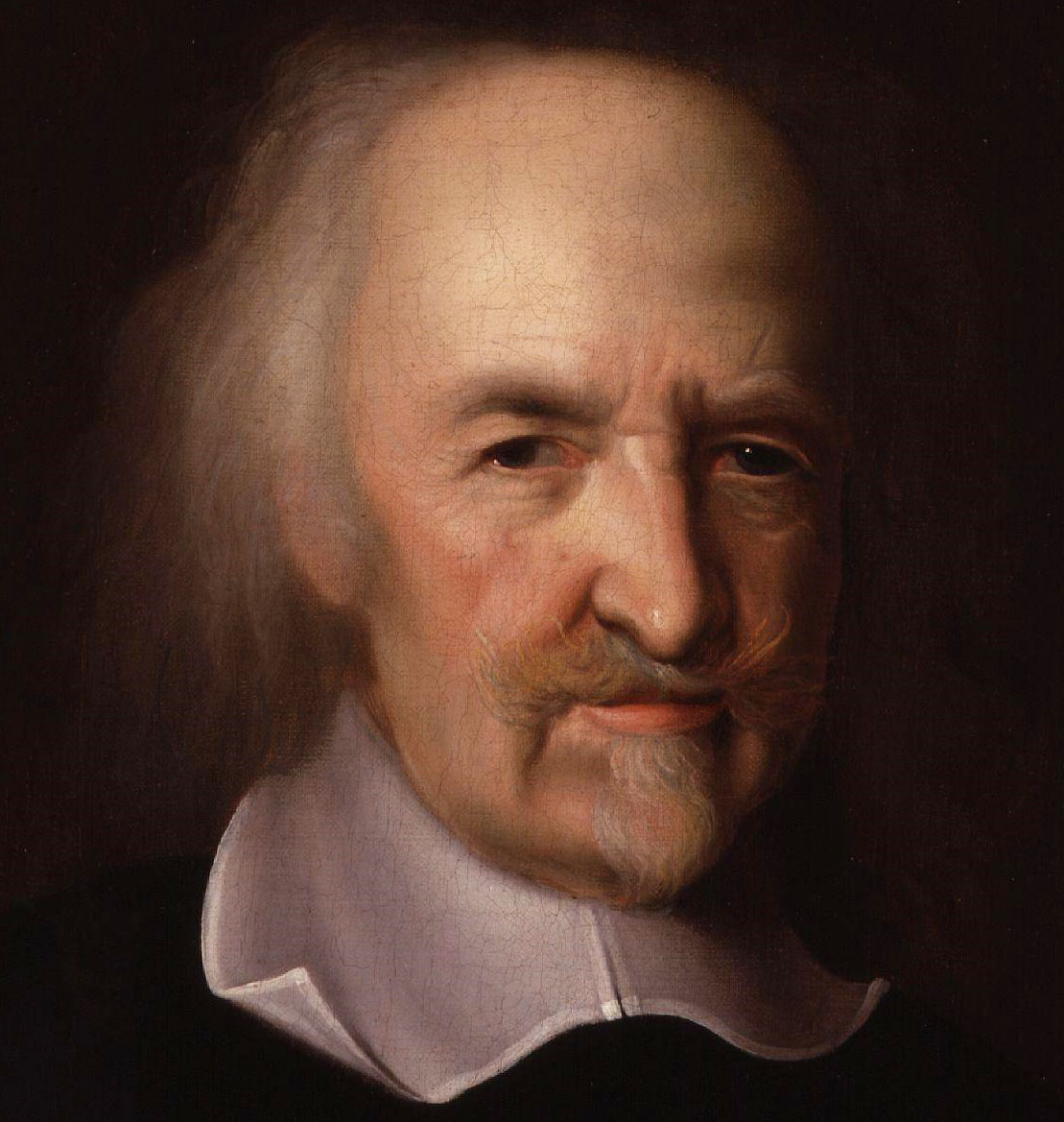 Thomas Hobbes1651
Hobbes argued that without a strong central authority human life would be "solitary, poor, nasty, brutish, and short," and that one line changed political philosophy for good.
Read this if you…
- want the founding text of modern political philosophy
- agree the hobbesian trap is an excellent framing (it is)
- are interested in the social contract
Skip this if you…
- don't like people arguing that people are innately horrible and need strong gov to keep them from killing each other
Why It Matters
Hobbes argued that without a strong central authority human life would be "solitary, poor, nasty, brutish, and short," and that one line changed political philosophy for good. Leviathan laid the groundwork for social contract theory and made every later political thinker either agree with it or explain why it was wrong. Modern political science starts here.
The  Take
Take
Honestly great logic and super interesting political philosophy, also interesting to find one of the main points was to put down the papacy
Where to go next
- History of the Peloponnesian War by Thucydides. Leviathan built on it. - *Leviathan*'s state of nature begins here — Hobbes translated the *History* into English himself, and never shook it off - Read the Melian Dialogue and you've read Hobbes's politics in embryo: power, fear, and the brutal logic of "the strong rule the weak" - The collapse of order Thucydides records at Corcyra is the disaster *Leviathan* is engineered to prevent
- The Republic by Plato. Leviathan built on it. - *Leviathan* names its ancestor outright — Hobbes invokes "the Commonwealth of Plato" in chapter 31 and ties his hope to Plato's own - Both books are blueprints for the just commonwealth, and both end at the same wager: order depends on the right kind of ruler - The *Republic*'s philosopher-king stands behind Hobbes's sovereign — reading Plato first shows you the lineage Hobbes is consciously joining
- Deuteronomy by Moses. Leviathan built on it. - *Leviathan*'s Part 3 turns on Deuteronomy — Hobbes quotes its own words ("no man knoweth of his sepulchre to this day") to argue the Pentateuch was finished long after Moses - He builds his sovereign on "Moses' seat" and the Mosaic covenant, and reads the "volume of the law" of Deuteronomy 11–27 as the model for law given by a single authority - Read Deuteronomy first and you see exactly what Hobbes is dismantling — and rebuilding — when he gets to scripture
- The Nicomachean Ethics by Aristotle. Leviathan built on it. - *Leviathan* defines itself against Aristotle — Hobbes quotes the "old moral philosophers" only to reject their highest good by name - Where the *Ethics* makes happiness a single complete end, Hobbes makes it restless, endless desire, and rejects the political-animal premise for a war of all against all - Read Aristotle first and Hobbes's opening moves snap into focus as a deliberate refutation
- Ethics by Baruch Spinoza. Leviathan shaped it. - Hobbes's mechanistic picture of human nature — every creature driven by the striving to persist in its own being — passed straight into Spinoza - Spinoza had Hobbes on his shelf (a Latin *De Cive*, and access to *Leviathan*) and built it into the bones of his system - But he turned the engine the other way: where *Leviathan* uses the striving self to justify an all-powerful sovereign, the *Ethics* uses it to argue toward freedom
Depicted in Art
Cropped first-edition engraving showing the composite sovereign — crowned, holding sword and crosier — towering over a quiet city in the foreground.
Abraham Bosse, 1651
Page from the 1651 first edition showing Hobbes's branching diagram of the kinds of knowledge — natural philosophy, politics, civil philosophy — laid out as a typographic tree.
1651
Recommended Editions

Penguin Classics
2017
Christopher Brooke's 2017 Penguin is the readable Hobbes. Text is clean, the introduction actually makes the state-of-nature argument feel live rather than antique.


Please support us by purchasing through these links, at no extra cost to you!
Deep Dive
What It's About
This summary gives away plot details.
Notable Quotes
“The life of man: solitary, poor, nasty, brutish, and short.”
“And the life of man, solitary, poor, nasty, brutish, and short.”