Prometheus Bound
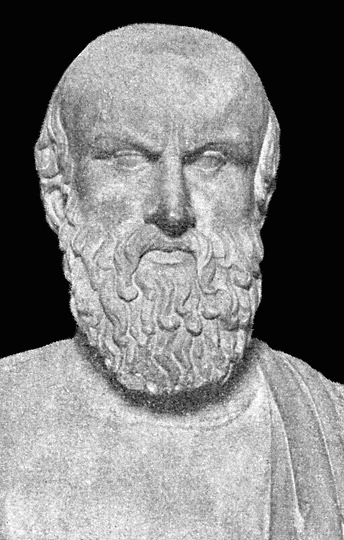 Aeschylusc. 460 BCE
Aeschylus dramatized a god punished for handing humanity fire, and with it knowledge and independence.
Read this if you…
- want a super short Greek Tragedy
- want A Character that is defiant against All Powerful gods
Skip this if you…
- haven't read oresteia to decide if you even like Aeschylus
- need a plot with a full arc
Why It Matters
Aeschylus dramatized a god punished for handing humanity fire, and with it knowledge and independence. It is the founding myth of rebellion against tyrannical power, and its mark on Romantic poetry, Marxist thought, and science fiction is huge. Prometheus became the permanent symbol for anyone who defies authority to help others, whatever it costs them.
The  Take
Take
Great myth Prometheus giving fire and ingenuity to humans, previously having helped Zeus, and now imprisoned by Zeus for this. Prometheus is clearly who you are supposed to root for, and he calls for revolution as part of the world
Where to go next
- Theogony/Works and Days by Hesiod. Prometheus Bound built on it. - The seedbed of the whole play — Hesiod's *Theogony* is where the Prometheus myth first takes form - Aeschylus lifts the fire-theft and Zeus's punishment straight from Hesiod, then reworks it: he separates the tortures, brings on Heracles to kill the eagle, and drops the sacrifice-trick - Read Hesiod first and the changes become visible — you can watch Aeschylus turn a god's punishment into the defiance of a tragic hero
- Frankenstein by Mary Wollstonecraft Shelley. Prometheus Bound shaped it. - The myth in the subtitle — *Frankenstein; or, The Modern Prometheus* - Mary Shelley copied out Percy's translation of this play in her own hand while writing the novel, July 1817 - Aeschylus gives Victor his shape: not Hesiod's kindly benefactor but the maker punished for what he brought into being
- Tess of the D’Urbervilles by Thomas Hardy. Prometheus Bound shaped it. - The line Hardy borrowed to seal a tragedy — Tess closes with "the President of the Immortals (in Aeschylean phrase) had ended his sport with Tess" - That phrase is Hardy's own translation out of *Prometheus Bound*, flagged in the text as Aeschylus's - Aeschylus's image of a cosmos run by a cruel, indifferent power gave Hardy the exact words to damn the universe that destroys his heroine
Depicted in Art
Prometheus, torch raised, lights a flame for kneeling early humans gathered around him in a dim grove.
Heinrich Friedrich Füger, 1817
Prometheus tumbles diagonally across the canvas, chained on his back as a massive eagle, talons in his face, tears at his liver.
Peter Paul Rubens, 1612
Late Rubens reworking of the bound titan writhing on the Caucasus rock while the eagle descends to feed.
Peter Paul Rubens, 1636
Muscular Prometheus chained head-down to the rock, the eagle gripping his torso and tearing flesh from his side.
Jacob Jordaens, 1640
Recommended Editions

Joel Agee
New York Review Books · 2021
Agee's 2021 version is taut and protest-play modern without dropping the mythic register. Mary Lefkowitz's introduction handles the authenticity debate (most scholars now think it isn't Aeschylus) without making it the whole story.


Please support us by purchasing through these links, at no extra cost to you!
Deep Dive
What It's About
This summary gives away plot details.
Notable Quotes
“For I am he who found for mortals the source of fire, sealed in a stalk of fennel. And fire has proved for mortals a teacher in every art, a great resource.”
“I hunted out and stored in fennel stalk the stolen source of fire that hath proved to mortals a teacher in every art and a means to mighty ends.”
More by Aeschylus
- The Persians
472 BCE · Tragedy
- The Seven Against Thebes
467 BCE · Tragedy
- The Suppliants
463 BCE · Tragedy
- The Oresteia
458 BCE · Tragedy