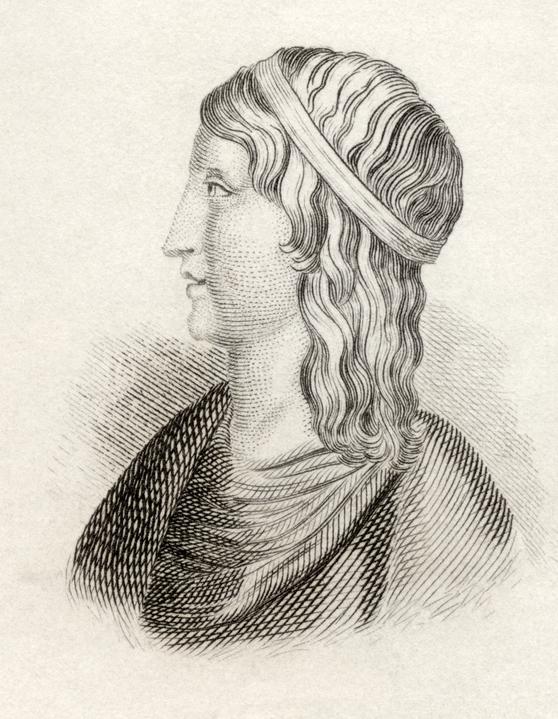
Apuleius
c. 124–c. 170 · Ancient Rome
“I, who am Nature, the parent of all things, the mistress of all the elements, the primordial offspring of time, the supreme among Divinities, the queen of departed spirits, the first of the celestials, and the uniform manifestation of the Gods and Goddesses.”
Peak-work percentile in the canon.
The lineage through Apuleius
Drew From(3)
who shaped Apuleius
via The Aeneid
- Under the talking-donkey comedy, The Golden Ass is shadowed by Virgil's epic — read the Aeneid first and you'll catch how much Apuleius is playing against it
- Psyche's journey down to the dead is built on Aeneas's katabasis in Book 6, the same architecture shrunk into a tale within a tale
- The Sychaeus-to-Dido dream and the golden-bough imagery are lifted and twisted — knowing the source makes the wit land
via The Symposium
- The Cupid and Psyche story isn't just a fairy tale — it's Plato's philosophy of love dressed as one
- Apuleius, a trained Platonist, builds Cupid's double nature on the Symposium's two Venuses, Heavenly and Common
- Read Plato on the ascent of eros first and Psyche's trials read as the soul's journey toward divine love, not just a girl chasing a god
via Metamorphoses
- Apuleius's novel was itself titled Metamorphoses — a deliberate nod to Ovid's poem of changing shapes
- The donkey-plot came from elsewhere, but the governing idea, transformation as the thread that strings a story together, is Ovid's, lifted out of verse and into the first great Latin novel
Inspired(4)
who Apuleius shaped
via The Decameron
- The bawdy adultery tales here didn't just survive antiquity — they got copied out by hand, twelve centuries later, by the man who wrote the Decameron
- Boccaccio personally annotated the Monte Cassino manuscript of Apuleius and transcribed the whole text for himself
- Two of those tales walk straight into the Decameron: the wife's tub becomes Peronella's (VII.2), the fuller's wife becomes day five's tenth story (V.10)
via Don Quixote
- Cervantes plundered Apuleius's playbook — the Golden Ass's knack for stuffing inset tales inside the main road-narrative becomes Don Quixote's whole architecture
- The most pointed debt is a single scene: Lucius stabbing three wineskins he takes for robbers at the Festival of Laughter is reborn as Quixote's midnight assault on the wineskins in Part 1
- Read the original drunken misadventure here and you'll spot Cervantes's wink across fifteen centuries
- Apuleius's bawdy, shape-shifting, episodic Golden Ass is a recognized ancestor of Rabelais's comic sprawl
- Scholars name Rabelais a direct heir to the ancient comic-novel tradition — Apuleius alongside Lucian — feeding the lewd-and-fantastical register the giants run on
- The only Latin novel to survive whole — and the seed of Shakespeare's most famous transformation
- Lucius, turned into an ass, is taken to bed by a noblewoman who adores the beast; Shakespeare hands Bottom an ass-head and a doting queen of the fairies
- Adlington's 1566 English version put Apuleius within Shakespeare's reach — phrasings from it surface across his plays
Portraits
Bearded profile head inscribed APVLEIVS on a 4th–5th-c. contorniate medallion — the closest thing to an ancient likeness, reprinted in editions of his works; imagined, struck centuries after his death, no contemporary portrait survives.
1825 lithographed biographical-dictionary portrait labelling him the 'Platonic philosopher and Latin prose writer' — a 19th-c. imagined likeness, the kind reprinted in reference works; no portrait from life exists.
1825
Famous Quotes
“Yet, as the light shone clear and the bed's mysteries were revealed, she found her savage beast was the gentlest and sweetest creature of all, that handsome god Cupid.”
“I reached the very gates of death and, treading Proserpine's threshold, yet passed through all the elements and returned. I have seen the sun at midnight shining brightly.”
“I'd like to string together various tales in the Milesian style, and charm your kindly ear with seductive murmurs.”
“Thus without knowing it Psyche fell further in love with Love himself, so that now inflamed with desire for Desire, she leaned over Cupid, desperate for him.”
About Apuleius
North African Roman author and Platonist philosopher, best known for The Golden Ass (Metamorphoses), the only Latin novel to survive in its entirety. The story of a man magically transformed into a donkey, it is a bawdy, picaresque adventure that concludes with a mystical religious conversion. He was tried for sorcery and acquitted.