Love's Labour's Lost
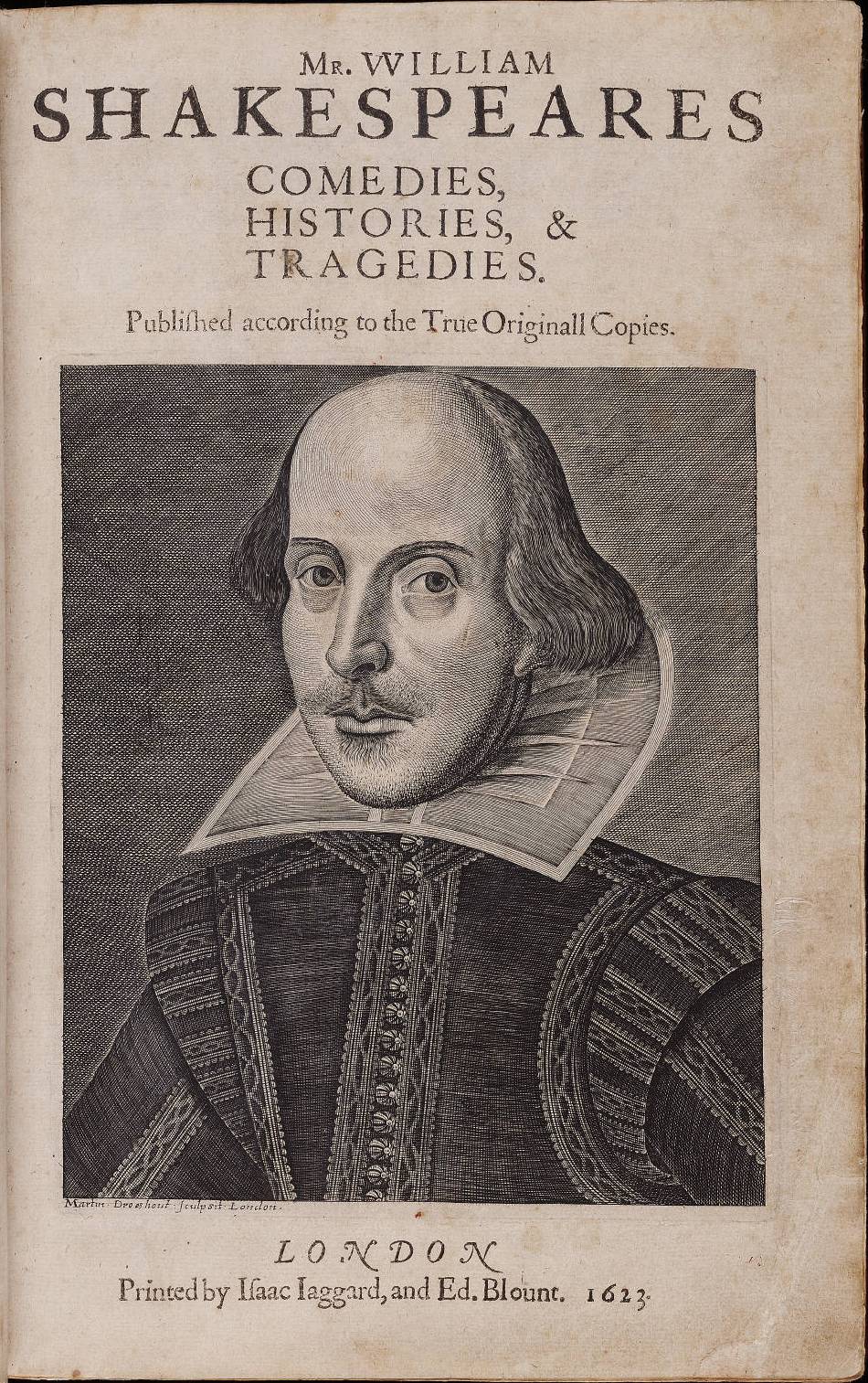 William Shakespearec. 1594
A comedy built almost entirely out of wordplay and wit.
Read this if you…
- want Shakespeare's most underrated comedy
- want some awesome love poetry, tons of puns
- don't care if the plot is absurd (they swear off women but are unable to stay away)
Skip this if you…
- aren't willing to go slow, read notes, look up analyses of famous passages (only way to "get" shakespeare)
- foolishly think shakespeare is overrated
- don't like his comedies compared to his tragedies
Why It Matters
A comedy built almost entirely out of wordplay and wit. Young men swear off women, the women outsmart them, and the play ends with a death instead of a wedding. It's one of Shakespeare's most linguistically dazzling works and the first real sign he could make language itself the subject of a play. The ending, no resolution, just everything postponed, still catches people off guard.
The  Take
Take
Incredible over the top poetry, mostly comedic and romantic. Very self aware. Awesome depiction of men and women. Plot and story arc was pretty lacking. Very difficult read, dense poetry
Where to go next
- Metamorphoses by Ovid. Love's Labour's Lost built on it. - The classical name *Love's Labour's Lost* drops on purpose — Ovid is invoked by name, not just borrowed - Holofernes praises 'Ovidius Naso' as the model for 'the jerks of invention,' so the play's own pedant tells you where its verbal extravagance comes from - Knowing the *Metamorphoses* sharpens the joke: this is Shakespeare nodding to his grammar-school master while gently sending him up
Depicted in Art
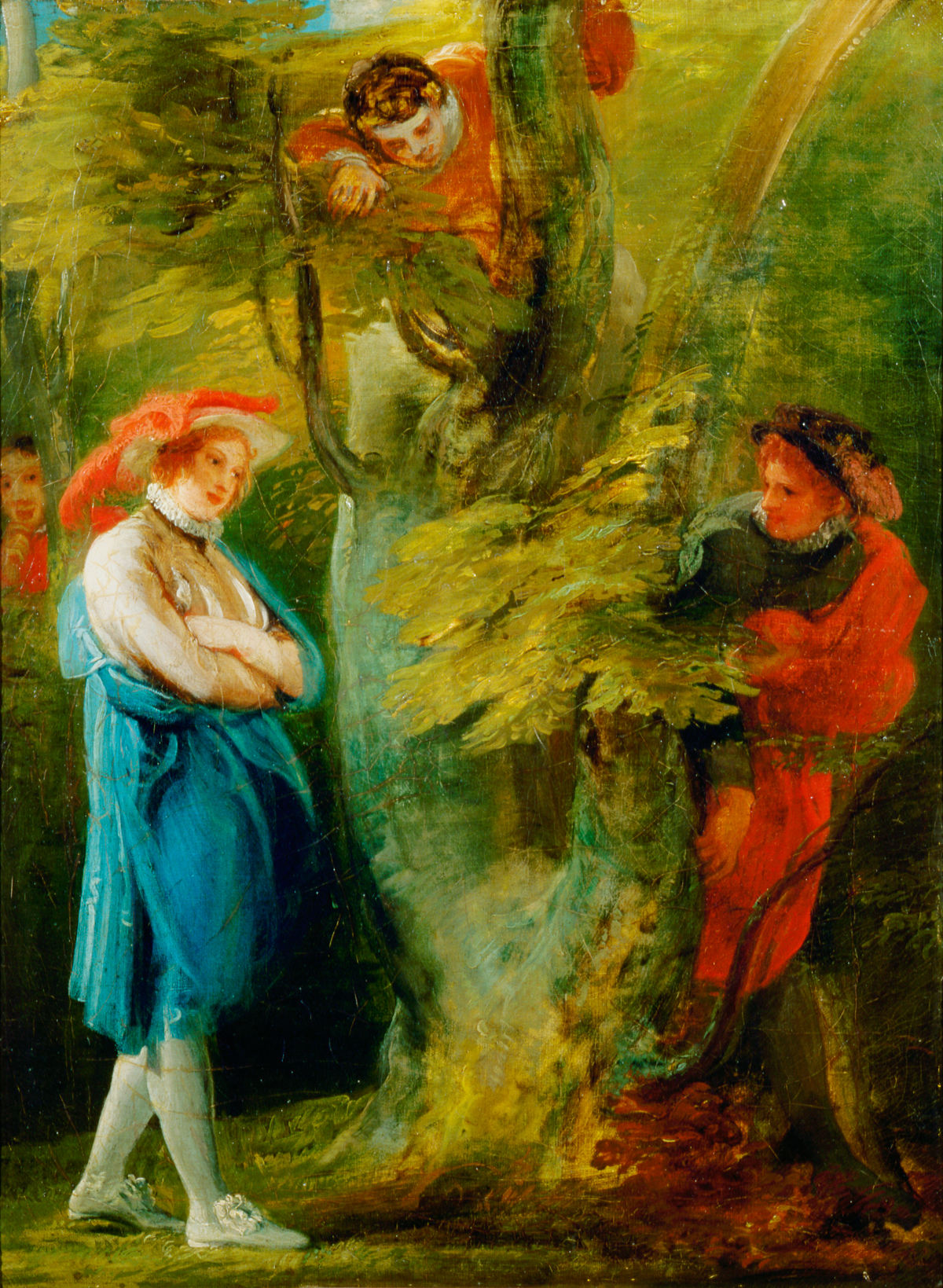
Berowne perched in a tree overhead, watching the King, Longaville, and Dumain unwittingly reveal their love sonnets to one another in the park below.
Thomas Stothard, 1800
The Princess of France draws back a bow in the park hunt while her ladies and Boyet attend, in the Boydell Shakespeare Gallery composition.
Thomas Ryder after William Hamilton, 1793
The Princess of France and her ladies arrive on horseback at Navarre's park gate, met by Boyet and the King's lords in formal greeting.
Thomas Stothard, 1803
An Art Nouveau personification of a flower from the play's text, in Crane's flowing line and pastel palette, set in a decorative border.
Walter Crane, 1909
A pavilion in the park near the palace: the Princess, Rosaline, Maria, and Katherine stand with lords and attendants as a forester points out the deer-stand.
William Hamilton and Thomas Ryder, 1793
Recommended Editions

Folger Shakespeare Library
2005
Folger's the readable one. Text on one page, notes on the facing page, written in plain English instead of textbook-speak. Catches every word and reference you'd otherwise Google, without breaking the scene to do it.
SparkNotes (No Fear Shakespeare)
2003

Please support us by purchasing through these links, at no extra cost to you!
Deep Dive
What It's About
This summary gives away plot details.
Notable Quotes
“The words of Mercury are harsh after the songs of Apollo.”
“When icicles hang by the wall, And Dick the shepherd blows his nail, And Tom bears logs into the hall, And milk comes frozen home in pail... Tu-whit, tu-who! A merry note, While greasy Joan doth keel the pot.”
More by William Shakespeare
- The Two Gentlemen of Verona
c. 1590 · Comedy
- King Henry VI, Part 2
c. 1591 · History Play
- King Henry VI, Part 3
c. 1591 · History Play
- The Taming of the Shrew
c. 1591 · Comedy
- Henry VI, Part 1
c. 1592 · History Play
- Titus Andronicus
c. 1592 · Tragedy
- Richard III
c. 1593 · History Play
- The Comedy of Errors
c. 1594 · Comedy
- A Midsummer Night’s Dream
c. 1595 · Comedy
- Richard II
c. 1595 · History Play
- Romeo and Juliet
c. 1595 · Tragedy
- King Henry IV, Part 1
c. 1596 · History Play
- King John
c. 1596 · History Play
- The Merchant of Venice
c. 1596 · Comedy
- Henry IV, Part Two
c. 1597 · History Play
- The Merry Wives of Windsor
c. 1597 · Comedy
- Much Ado About Nothing
c. 1598 · Comedy
- As You Like It
c. 1599 · Comedy
- Henry V
c. 1599 · History Play
- Julius Caesar
c. 1599 · Tragedy
- Hamlet
c. 1600 · Tragedy
- Twelfth Night
c. 1601 · Comedy
- Troilus and Cressida
c. 1602 · Satire
- Othello
c. 1603 · Tragedy
- All's Well That Ends Well
c. 1604 · Comedy
- Measure for Measure
c. 1604 · Comedy
- King Lear
c. 1605 · Tragedy
- Antony and Cleopatra
c. 1606 · Tragedy
- Macbeth
c. 1606 · Tragedy
- Timon of Athens
c. 1606 · Tragedy
- Pericles
c. 1607 · Romance
- Coriolanus
c. 1608 · Tragedy
- Shakespeare's Sonnets
1609 · Lyric
- Cymbeline
c. 1610 · Romance
- The Winter's Tale
c. 1610 · Romance
- The Tempest
c. 1611 · Romance
- Henry VIII
c. 1613 · History Play
- The Two Noble Kinsmen
c. 1613 · Romance