
Hamlet
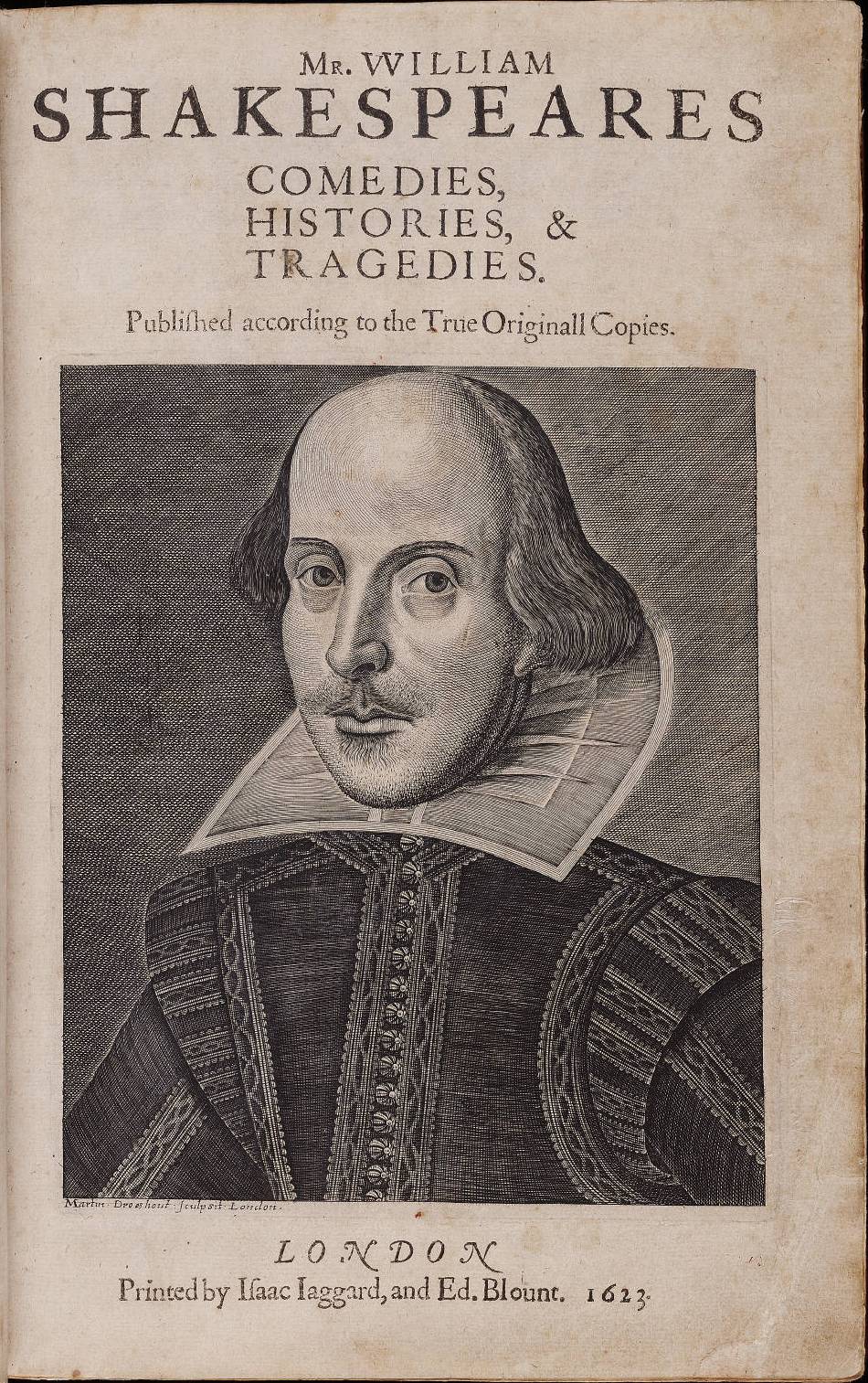 William Shakespearec. 1600
The most analyzed play in world literature.
Read this if you…
- want the most revered play of all time
- want 3 soliloquys so good, you can't believe it ("to be or not to be" is the headliner)
- want a deep introspective play that has endless layers and potential analysis
Skip this if you…
- aren't willing to go slow, read notes, look up analyses of famous passages (only way to "get" shakespeare)
- foolishly think shakespeare is overrated
Why It Matters
The most analyzed play in world literature. A prince who can't bring himself to act, a ghost demanding revenge, and a tragedy that asks whether thinking too hard makes action impossible. Hamlet handed the English language more quotable lines than any other single work. It's the play that proved drama could go as deep into a person's inner life as philosophy can.
Where to go next
- The Aeneid by Virgil. Hamlet built on it. - *Hamlet*'s Player's Speech is Virgil, explicitly: 'Aeneas' tale to Dido,' the fall of Troy from *Aeneid* Book 2 - Shakespeare has the actor recite Priam's slaughter and Hecuba's grief as a play-within-the-play — and it's that Virgilian image that goads Hamlet into shame at his own delay - Knowing the source episode sharpens the scene: this is the most famous tragedy borrowing its emotional pivot from the Roman epic
- Metamorphoses by Ovid. Hamlet built on it. - *Hamlet* reaches for Ovid again and again — Niobe, Hecuba, Hyperion, the forgetful waters of Lethe all surface from the *Metamorphoses* - The Player's Speech is built on Golding's Ovid, the ~200 lines on Hecuba's fall (*Met.* 13) - Shakespeare had read lots of Ovid in Golding's translation; the *Metamorphoses* is the single classical text standing behind *Hamlet* more than any other
- Fathers and Sons by Ivan Turgenev. Hamlet shaped it. - Turgenev turned Hamlet into a type — the skeptic of negation, paralyzed by his own self-awareness — in his 1860 essay 'Hamlet and Don Quixote' - Two years later he poured that type into Bazarov, the brilliant nihilist whose egoism leaves him unable to love - *Fathers and Sons* is Hamlet transplanted to provincial Russia: read the play and you've already met Bazarov's ancestor
- Faust, First Part by Johann Wolfgang von Goethe. Hamlet shaped it. - Goethe named Shakespeare one of the three formative influences of his life, and *Faust* wears the debt openly - Gretchen is Goethe's Ophelia — the woman the hero takes up and ruins, undone into madness, her brother killed avenging her - The borrowing is direct down to the staging: Mephistopheles sings one of Ophelia's mad songs, and Faust's churchyard scene plays as a dark echo of Hamlet's graveyard
- Crime and Punishment by Fyodor Dostoevsky. Hamlet shaped it. - Dostoevsky read *Hamlet* in Russian and French and wrestled with it in his notebooks — *How terrible! How petty is man! Hamlet! Hamlet!* - Raskolnikov is his Russian Hamlet: the brooding intellectual paralyzed by a deed, conscience turned against itself - Where Shakespeare's prince agonizes over a murder he must commit, Dostoevsky recasts the type as the modern murderer agonizing over one he has
- Dracula by Bram Stoker. Hamlet shaped it. - Stoker knew this play in his bones — he managed Henry Irving's Lyceum, where *Hamlet* was a fixture, and reviewed Irving's *Hamlet* back in 1876 - He salts *Dracula* with it: Harker's journal invokes *the ghost of Hamlet's father* and confesses he never grasped a line of the play until he lived it at the Count's castle
Depicted in Art
Bernhardt Hamlet2
Lafayette Photo, London, 1899
Ophelia floats on her back in a flower-strewn stream, mouth open in mid-song, garments billowing as the current carries her toward her drowning.
John Everett Millais, 1852
Sarah Bernhardt as Hamlet stands in black against a Celtic-arched ground, the ghost of his father in the upper lunette and drowned Ophelia in the footing strip.
Alphons Mucha, 1899
Ophelia reclines on a grassy bank by a lily pond weaving flowers into her loosened hair, the willow tree arching behind her.
John William Waterhouse, 1894
The armoured ghost rises on the dark Elsinore battlements as Hamlet recoils, Horatio and Marcellus shrinking behind him.
Eugène Delacroix, 1843
Hamlet stands over an open grave examining Yorick's skull held out by a gravedigger as Horatio looks on against a stormy sky.
Eugène Delacroix, 1839
Ophelia, half-undressed in white, stands at the edge of a stream gathering wildflowers, gaze unfocused, the willow branches behind her.
Jules Joseph Lefebvre, 1890
Ophelia in a pale blue gown reclines against the trunk of a willow, head thrown back, one hand gripping a broken branch above dark water.
Alexandre Cabanel, 1883
Mad Ophelia in white distributes herbs and flowers before Claudius and Gertrude in a crowded Elsinore hall, Laertes at her side.
Benjamin West, 1792
Hamlet stands at the edge of an open grave examining Yorick's skull while two gravediggers continue their work below.
Pascal Dagnan-Bouveret, 1883
Recommended Editions

Folger Shakespeare Library
2003
Folger's the readable one. Text on one page, notes on the facing page, written in plain English instead of textbook-speak. Catches every word and reference you'd otherwise google, without breaking the scene to do it.


Please support us by purchasing through these links, at no extra cost to you!
Deep Dive
What It's About
This summary gives away plot details.
Notable Quotes
“To be, or not to be, that is the question.”
“Something is rotten in the state of Denmark.”
More by William Shakespeare
- The Two Gentlemen of Verona
c. 1590 · Comedy
- King Henry VI, Part 2
c. 1591 · History Play
- King Henry VI, Part 3
c. 1591 · History Play
- The Taming of the Shrew
c. 1591 · Comedy
- Henry VI, Part 1
c. 1592 · History Play
- Titus Andronicus
c. 1592 · Tragedy
- Richard III
c. 1593 · History Play
- Love's Labour's Lost
c. 1594 · Comedy
- The Comedy of Errors
c. 1594 · Comedy
- A Midsummer Night’s Dream
c. 1595 · Comedy
- Richard II
c. 1595 · History Play
- Romeo and Juliet
c. 1595 · Tragedy
- King Henry IV, Part 1
c. 1596 · History Play
- King John
c. 1596 · History Play
- The Merchant of Venice
c. 1596 · Comedy
- Henry IV, Part Two
c. 1597 · History Play
- The Merry Wives of Windsor
c. 1597 · Comedy
- Much Ado About Nothing
c. 1598 · Comedy
- As You Like It
c. 1599 · Comedy
- Henry V
c. 1599 · History Play
- Julius Caesar
c. 1599 · Tragedy
- Twelfth Night
c. 1601 · Comedy
- Troilus and Cressida
c. 1602 · Satire
- Othello
c. 1603 · Tragedy
- All's Well That Ends Well
c. 1604 · Comedy
- Measure for Measure
c. 1604 · Comedy
- King Lear
c. 1605 · Tragedy
- Antony and Cleopatra
c. 1606 · Tragedy
- Macbeth
c. 1606 · Tragedy
- Timon of Athens
c. 1606 · Tragedy
- Pericles
c. 1607 · Romance
- Coriolanus
c. 1608 · Tragedy
- Shakespeare's Sonnets
1609 · Lyric
- Cymbeline
c. 1610 · Romance
- The Winter's Tale
c. 1610 · Romance
- The Tempest
c. 1611 · Romance
- Henry VIII
c. 1613 · History Play
- The Two Noble Kinsmen
c. 1613 · Romance