
Shakespeare's Sonnets
Shakespeare took the 14-line sonnet and made it carry time, desire, beauty, and mortality with more psychological depth than anyone before or since.
Read this if you…
- have already read Shakespeare's best plays
Skip this if you…
- are expecting it to be as good as his great plays
Why It Matters
Shakespeare took the 14-line sonnet and made it carry time, desire, beauty, and mortality with more psychological depth than anyone before or since. The mysteries built into the sequence, the Fair Youth, the Dark Lady, the rival poet, have kept scholars arguing for centuries. These poems permanently widened what lyric poetry could do.
The  Take
Take
Excellent Shakespearean poetry, but nothing that will stay with me forever
Where to go next
- Canzoniere by Francesco Petrarca. Shakespeare's Sonnets built on it. - The tradition Shakespeare is pushing against — Petrarch's *Canzoniere* founded the Petrarchan sonnet and its idealizing conventions - Sonnet 130 ("My mistress' eyes are nothing like the sun") is a direct mockery of the *Canzoniere*'s stock metaphors — eyes-like-the-sun, lips-like-coral - Read Petrarch first and the subversion lands: you can't hear Shakespeare's joke without the idiom he's deflating
- Metamorphoses by Ovid. Shakespeare's Sonnets built on it. - When Shakespeare promises his verse will outlive marble and gilded monuments (Sonnets 55, 60, 65), he's standing on Ovid — the poetry-outlasts-time idea comes straight from the close of *Metamorphoses* Book 15 - He knew Ovid intimately: in Latin from grammar school, and in Golding's 1567 translation, the version he read and lifted from - Read Ovid's ending first and you'll hear Shakespeare progressively transforming the boast across the sequence — same claim, made personal and obsessive
Depicted in Art
Oil portrait of a bearded man with dark hair, a single gold earring, and an open collar against a plain dark ground.
John Taylor, 1610
Letterpress title page reading SHAKE-SPEARES SONNETS Neuer before Imprinted, with Thomas Thorpe's imprint below.
1609
A young woman seated on a riverbank reads a sonnet while the courting youth beside her looks down, blushing self-consciously, hand to chin.
William Mulready, 1839
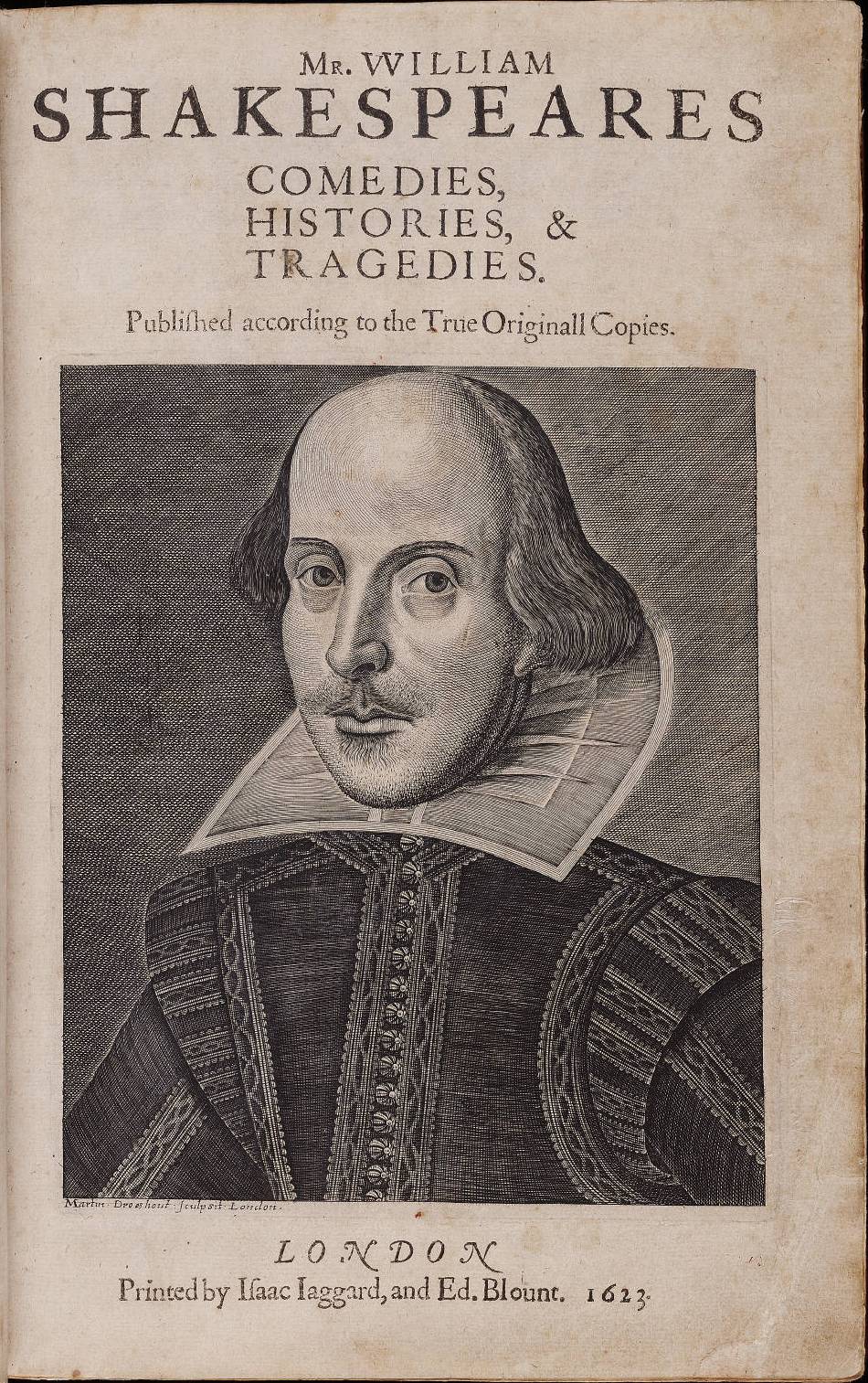
Bust-length engraved portrait of Shakespeare in a starched lace collar, balding above a high domed forehead, facing the viewer.
Martin Droeshout, 1623
Recommended Editions

Arden Shakespeare
2010
Katherine Duncan-Jones's Arden is the working scholarly edition. Her introduction takes the Fair Youth and Dark Lady questions seriously without getting lost in them, and the per-sonnet commentary is unusually generous.


Please support us by purchasing through these links, at no extra cost to you!
Deep Dive
What It's About
This summary gives away plot details.
Notable Quotes
“Shall I compare thee to a summer's day? Thou art more lovely and more temperate.”
“Let me not to the marriage of true minds admit impediments.”
More by William Shakespeare
- The Two Gentlemen of Verona
c. 1590 · Comedy
- King Henry VI, Part 2
c. 1591 · History Play
- King Henry VI, Part 3
c. 1591 · History Play
- The Taming of the Shrew
c. 1591 · Comedy
- Henry VI, Part 1
c. 1592 · History Play
- Titus Andronicus
c. 1592 · Tragedy
- Richard III
c. 1593 · History Play
- Love's Labour's Lost
c. 1594 · Comedy
- The Comedy of Errors
c. 1594 · Comedy
- A Midsummer Night’s Dream
c. 1595 · Comedy
- Richard II
c. 1595 · History Play
- Romeo and Juliet
c. 1595 · Tragedy
- King Henry IV, Part 1
c. 1596 · History Play
- King John
c. 1596 · History Play
- The Merchant of Venice
c. 1596 · Comedy
- Henry IV, Part Two
c. 1597 · History Play
- The Merry Wives of Windsor
c. 1597 · Comedy
- Much Ado About Nothing
c. 1598 · Comedy
- As You Like It
c. 1599 · Comedy
- Henry V
c. 1599 · History Play
- Julius Caesar
c. 1599 · Tragedy
- Hamlet
c. 1600 · Tragedy
- Twelfth Night
c. 1601 · Comedy
- Troilus and Cressida
c. 1602 · Satire
- Othello
c. 1603 · Tragedy
- All's Well That Ends Well
c. 1604 · Comedy
- Measure for Measure
c. 1604 · Comedy
- King Lear
c. 1605 · Tragedy
- Antony and Cleopatra
c. 1606 · Tragedy
- Macbeth
c. 1606 · Tragedy
- Timon of Athens
c. 1606 · Tragedy
- Pericles
c. 1607 · Romance
- Coriolanus
c. 1608 · Tragedy
- Cymbeline
c. 1610 · Romance
- The Winter's Tale
c. 1610 · Romance
- The Tempest
c. 1611 · Romance
- Henry VIII
c. 1613 · History Play
- The Two Noble Kinsmen
c. 1613 · Romance